
Who Does ChatGPT Name in Your Town?
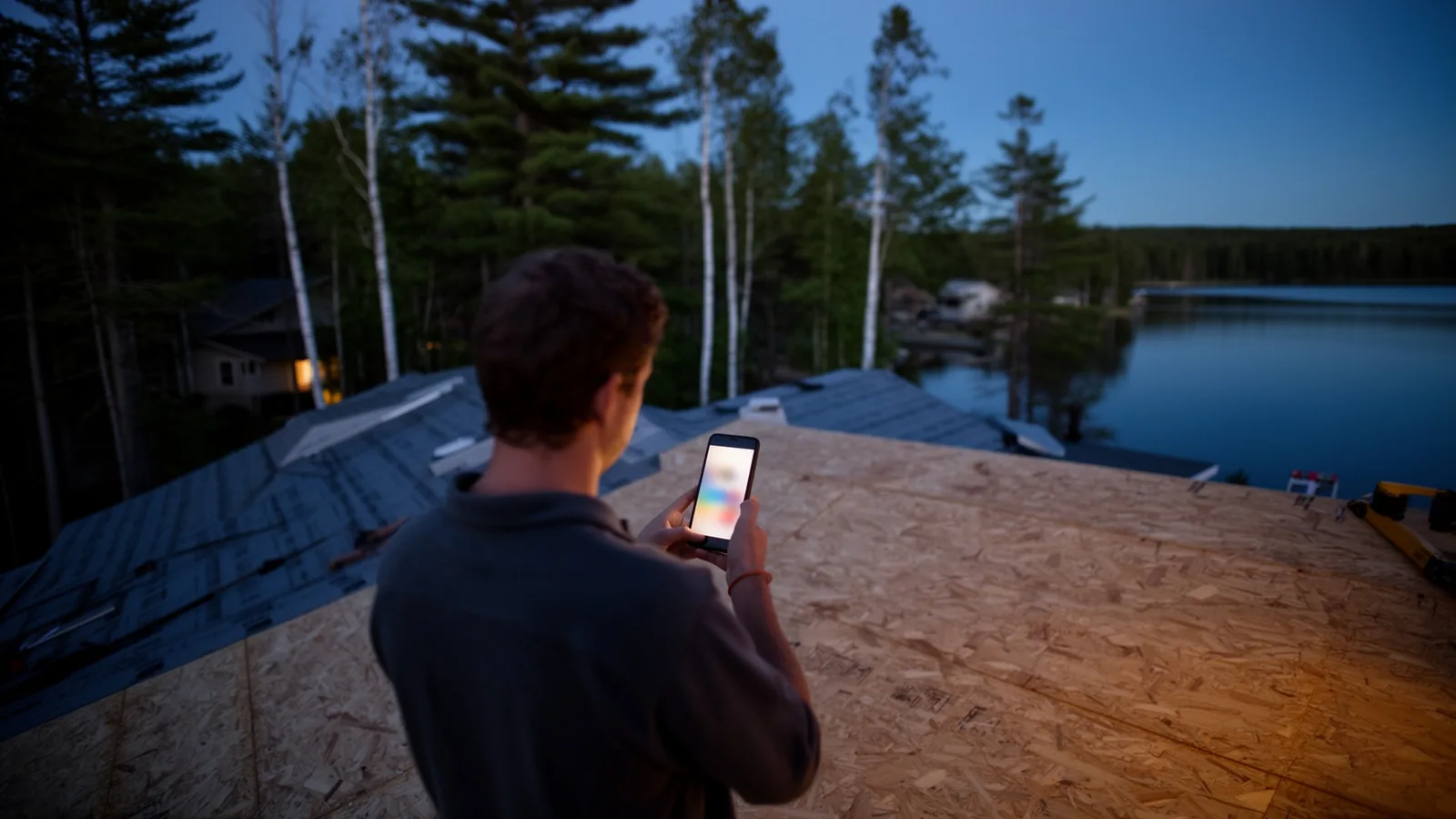
I asked ChatGPT for the best roofer near me. I run a roofing company in Crosby, Minnesota, so I had a pretty good idea who ought to come up. What I wanted to see was who ChatGPT would actually name, what it said about each one, and where it got that.
This post walks through the test: the exact questions I asked, how to read the answer, and how to work out why ChatGPT picked the names it picked. You don't have to be a roofer for any of it. Swap in your trade and your town and it works the same way.
What I asked, word for word
Wording matters, so here is exactly what I typed:
- "Who's the best roofer near me?"
- "Who are the best roofing companies in Crosby, Minnesota, and why?"
- "I've got a leak over my kitchen. Who should I call in the Brainerd Lakes area?"
The first one is how a lot of homeowners talk. But "near me" makes ChatGPT guess where you are. OpenAI says ChatGPT may use an approximate location based on your IP address (the address your internet connection uses) and can rewrite a "near me" question into a search with a city in it (OpenAI Help Center). If your internet provider places you in Brainerd or the Twin Cities, that's the town it searches. So ask a second time with your town's name in it.
I also asked each question more than once. OpenAI says the same question can get different answers each time (OpenAI Help Center). One answer is a snapshot, not a verdict.
A few names, not ten blue links
ChatGPT doesn't give you ten blue links. It gives you a few names. That's the first thing you notice. On Google you get ads, a map and a page of results to scroll through. In ChatGPT the answer is a short write-up: a handful of companies, a line or two about each, and on a phone, sometimes a map. OpenAI says results on iOS and Android may include one (OpenAI Help Center).
That changes the math for you. On a page of results, the fifth listing still gets clicks, because people scroll and compare. In a short answer, there may not be a fifth name at all. You're either in the answer or you're not in the conversation.
How to read the answer
Don't stop at the names. Look at three things.
- What it says about each company. That sentence came from somewhere. If it says a company "specializes in metal roofs for lake homes," some page on the web said so plainly.
- The sources. OpenAI says answers that use web search may include citations, and you can open each one, or tap Sources to see the list (OpenAI Help Center). This is where the "why" lives.
- Who's missing. Think of the companies you know do good work in your town. If they aren't there, ask yourself what ChatGPT could have read about them.
OpenAI also says search results and citations "can be incomplete, outdated, or incorrect" (OpenAI Help Center). So treat the answer as a picture of what's out there about each business, not as a judge of who does the best work.
Why it picked them
Here's the honest part. OpenAI doesn't publish a formula. Its help page says ChatGPT ranks search results "using multiple factors intended to help users find relevant, reliable information," and that placement is not guaranteed (OpenAI Help Center).
So the way to learn why is to open the sources and look at what the named companies have in common. When we do this for a contractor, here's what we check on each name that came up:
- Does their own website say, in plain words, what they do and which towns they work in?
- Are the basic facts the same everywhere (business name, phone, town)?
- Are they listed, and reviewed, on the sites ChatGPT cited?
- Do their pages answer the questions homeowners actually ask?
ChatGPT can only name what it can read
ChatGPT can only say what it can read and back up. A big outfit whose website is mostly photos, with its service area baked into a banner image, can give ChatGPT less to work with than a two-truck crew whose site says in plain text: we replace roofs in Crosby, Ironton and Brainerd.
Two facts back up the "it has to read you first" part. OpenAI says sites that block OAI-SearchBot, the program that reads web pages for ChatGPT search, won't be shown in ChatGPT search answers (OpenAI crawler documentation). And a December 2024 study by Vercel and MERJ found that OpenAI's crawlers don't run JavaScript, the code many modern websites use to load their words after the page opens (Vercel). A company can be the biggest name in town and still hand ChatGPT a nearly blank page.
Try it tonight in your own trade
Try this tonight: ask ChatGPT who it'd call in your trade. It takes about five minutes.
- Open ChatGPT and ask: "Who are the best [your trade] companies in [your town], and why?"
- Ask it again, worded the way a worried homeowner would: "My [furnace / roof / sump pump] just quit. Who should I call in [your town]?"
- Ask once more for the next town over, where you also work.
- For each answer, write down: were you named, what did it say about you, and which sources did it cite?
- Open two or three of the sources and see what they say about the companies that were named.
Then do it again next month. Answers move, and you want to know which way.
If you're not in the answer
Nobody can promise that ChatGPT will name you. Anyone who does is guessing. What you can do is make sure it can read you:
- Let it in. Your website has a small file called robots.txt that tells crawlers what they may read. Make sure it doesn't block OAI-SearchBot.
- Say it in plain text. Your trade, your towns and your phone number, written as words on your homepage, not only inside a picture.
- Match your facts. The same business name, phone and town on your website, your Google Business Profile and your Facebook page.
- Show up where it looked. If ChatGPT cited a directory or review site for the other companies, make sure you have a complete listing there too.
If you'd like to see how readable your own website is before you start, our free audit at www.peakgrowthpartner.com/audit runs our five-part check in a few seconds. You type in your web address, and that's all it asks for.
Sources
- OpenAI Help Center, "Searching the web with ChatGPT" (location, citations, ranking, OAI-SearchBot): https://help.openai.com/en/articles/9237897-searching-the-web-with-chatgpt
- OpenAI Help Center, "How ChatGPT and our foundation models are developed" (the same question can get different answers): https://help.openai.com/en/articles/7842364-how-chatgpt-and-our-foundation-models-are-developed
- OpenAI, "Overview of OpenAI crawlers" (OAI-SearchBot): https://developers.openai.com/api/docs/bots
- Vercel and MERJ, "The rise of the AI crawler" (December 17, 2024): https://vercel.com/blog/the-rise-of-the-ai-crawler