
Your Reviews Are Talking to ChatGPT
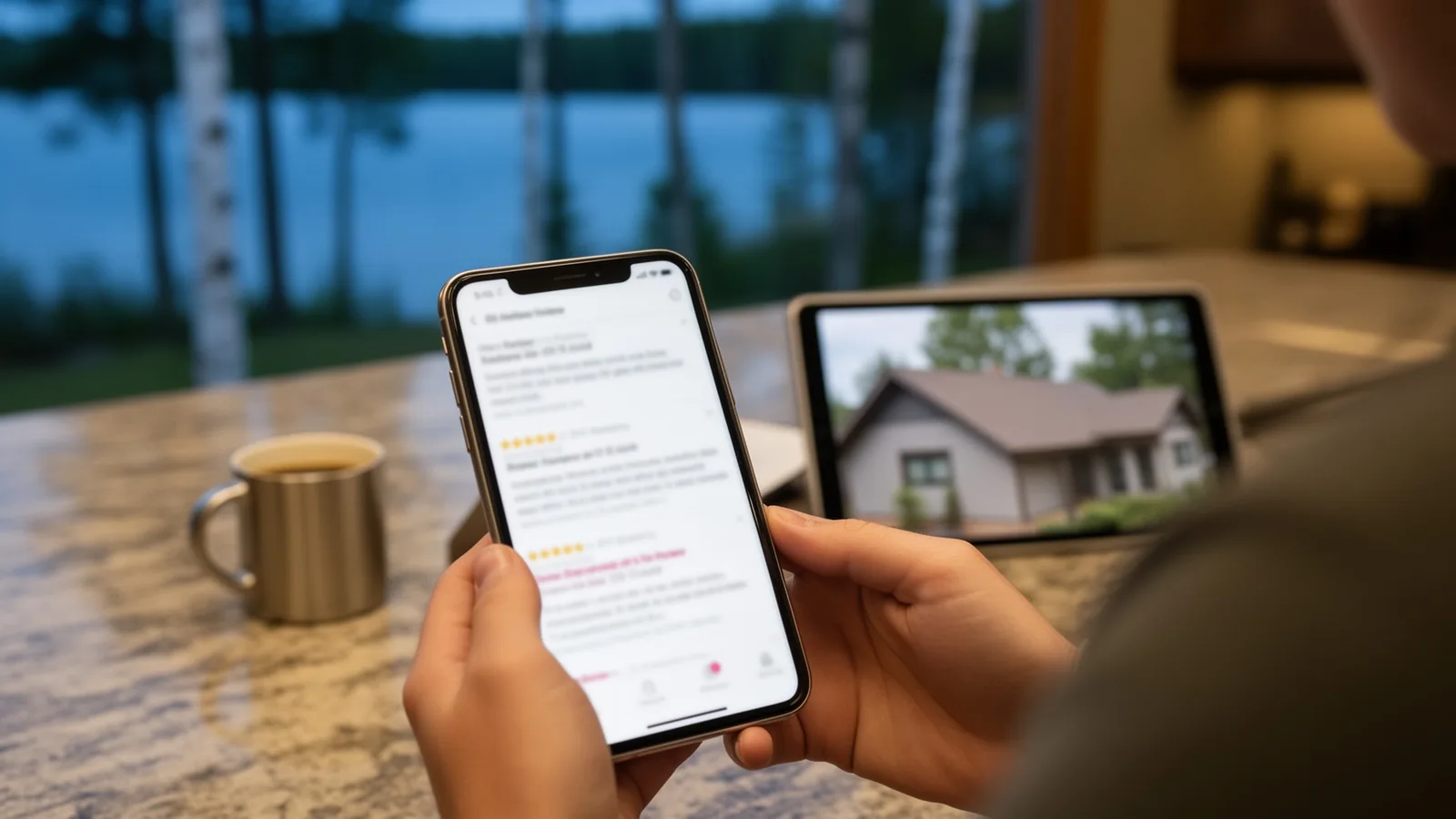
You used to collect reviews for one reader: the homeowner deciding whether to call you. That reader is still the main one. But there's a second reader now. When a homeowner asks ChatGPT or Google's AI who to call, those tools can draw on what customers have written about local businesses, and they can sum it up in a sentence.
That changes what a good review looks like, and it makes your replies matter more than they used to. Here's what's known about how your reviews get read, and what actually helps.
What ChatGPT and Google's AI can read about your reviews
Reviews reach ChatGPT and Google's AI by different routes. Here's what's on the record.
Google. Google says the number of reviews and favorable ratings can help a business's local ranking, and that "positive reviews and helpful replies can help your business stand out" (Google Business Profile Help). Your Google reviews sit right on your Business Profile, and Google tells businesses to keep that profile up to date for its AI Overviews and AI Mode (Google Search Central).
ChatGPT. In July 2026, Axios reported that Yelp is licensing its reviews, ratings, photos and business information to OpenAI, with Yelp branding and links shown alongside them in ChatGPT (MarTech, reporting Axios). ChatGPT can also search the web and read review pages it finds there (OpenAI Help Center). OpenAI hasn't said whether ChatGPT reads Google reviews directly.
Homeowners are reading those summaries. BrightLocal's 2026 survey of 1,002 US consumers found 82% read AI-generated review summaries (BrightLocal). So the sentence a machine writes about your reviews is often the first thing a homeowner sees.
The same survey found Google's share of people using it for reviews dipped from 83% in 2025 to 71% in 2026, and that people use an average of six review sites. Google is still the big one. It just isn't the only one.
A review that names the job
A review that names the job says more than "great work." Here are two five-star reviews. Both are examples written for this post, not real customers:
- "Great work! Highly recommend!"
- "They replaced the roof on our cabin on the Whitefish Chain in two days, cleaned up every nail, and sent us photos because we were back in the Cities."
Both are nice. Only the second tells a homeowner, or a machine summing up your reviews, what you actually do and where. It names the job, the place and the thing that mattered to that customer. When a homeowner asks ChatGPT for "a roofer who works on lake cabins," reviews like that give a summary something to work with.
Think about it from the other side. A summary can only repeat what's in the reviews. If fifty reviews all say "great job, nice guys," the summary will say you do a great job and you're nice. That's fine, but it doesn't tell anyone you do cabins, or steep roofs, or work through the winter. The details your customers mention are the details that get passed along.
You can't write reviews for customers, and you shouldn't. But you can make the ask specific:
- Ask right after the job, in person. It's when they're happiest.
- Make it one tap. Google suggests sharing a review link or QR code, for example in a thank-you email or on a receipt (Google Business Profile Help).
- Give them a starting point, not a script. "If you have a minute, a sentence about what we did and where would really help other homeowners."
- Never pay for reviews. Google says business owners shouldn't offer customers anything in return for a review (Google Business Profile Help). No discounts, no gift cards.
- Ask everybody. Not just the customers you know were thrilled.
Reply to every review
Reply to your reviews. Here's why it matters now. A reply is public, it's written text, and it sits right next to the review. Homeowners read it. So can anything that reads the page.
Google says "when you reply to customer reviews, it shows that you value their feedback" (Google Business Profile Help). BrightLocal found 80% of consumers say they're likely to use a business that responds to all of its reviews, and that generic or templated replies put off 50% of them (BrightLocal).
So the reply has to sound like you, not like a form letter. A good reply:
- Thanks them by name and mentions the job. For example: "Thanks for having us out. Glad the new gutters held up through that first big rain."
- Adds a useful detail if there is one: the town, the material, what to watch for.
- Stays calm on a bad one. Say what you'll do, offer to talk, and take it off the page. The next homeowner is reading how you handle trouble.
- Is short. Two or three sentences.
Get reviewed where people look
Google first, always. Then the other places homeowners in your area use. Since Axios reported that Yelp's reviews are going to ChatGPT, claim your Yelp page if you haven't, and make sure the name, phone and towns match your Google profile. After that, the sites for your trade, the BBB and any local directories.
Don't spread yourself thin. One review site with steady, specific, answered reviews beats five sites with two reviews each.
What this won't do
Reviews won't fix a website ChatGPT can't read, and nobody can promise that more reviews get you named. Reviews are one of the things that tell ChatGPT and Google's AI what people say about you. Your website is where you say it yourself. You want both.
If you'd like to see the website half of that picture, the free audit at www.peakgrowthpartner.com/audit runs our five-part check on your homepage in a few seconds. Your web address is all it asks for.
Sources
- Google Business Profile Help, "Tips to improve your local ranking on Google": https://support.google.com/business/answer/7091
- Google Business Profile Help, "Tips to get more Google reviews": https://support.google.com/business/answer/7035772
- Google Search Central, "AI features and your website": https://developers.google.com/search/docs/appearance/ai-features
- MarTech, "Yelp brings reviews and local leads to ChatGPT" (July 28, 2026, reporting Axios): https://martech.org/yelp-brings-reviews-and-local-leads-to-chatgpt/
- OpenAI Help Center, "Searching the web with ChatGPT": https://help.openai.com/en/articles/9237897-searching-the-web-with-chatgpt
- BrightLocal, Local Consumer Review Survey 2026 (February 11, 2026; 1,002 US adults): https://www.brightlocal.com/research/local-consumer-review-survey/