
The 98.8% problem: why almost every local business is invisible to AI search
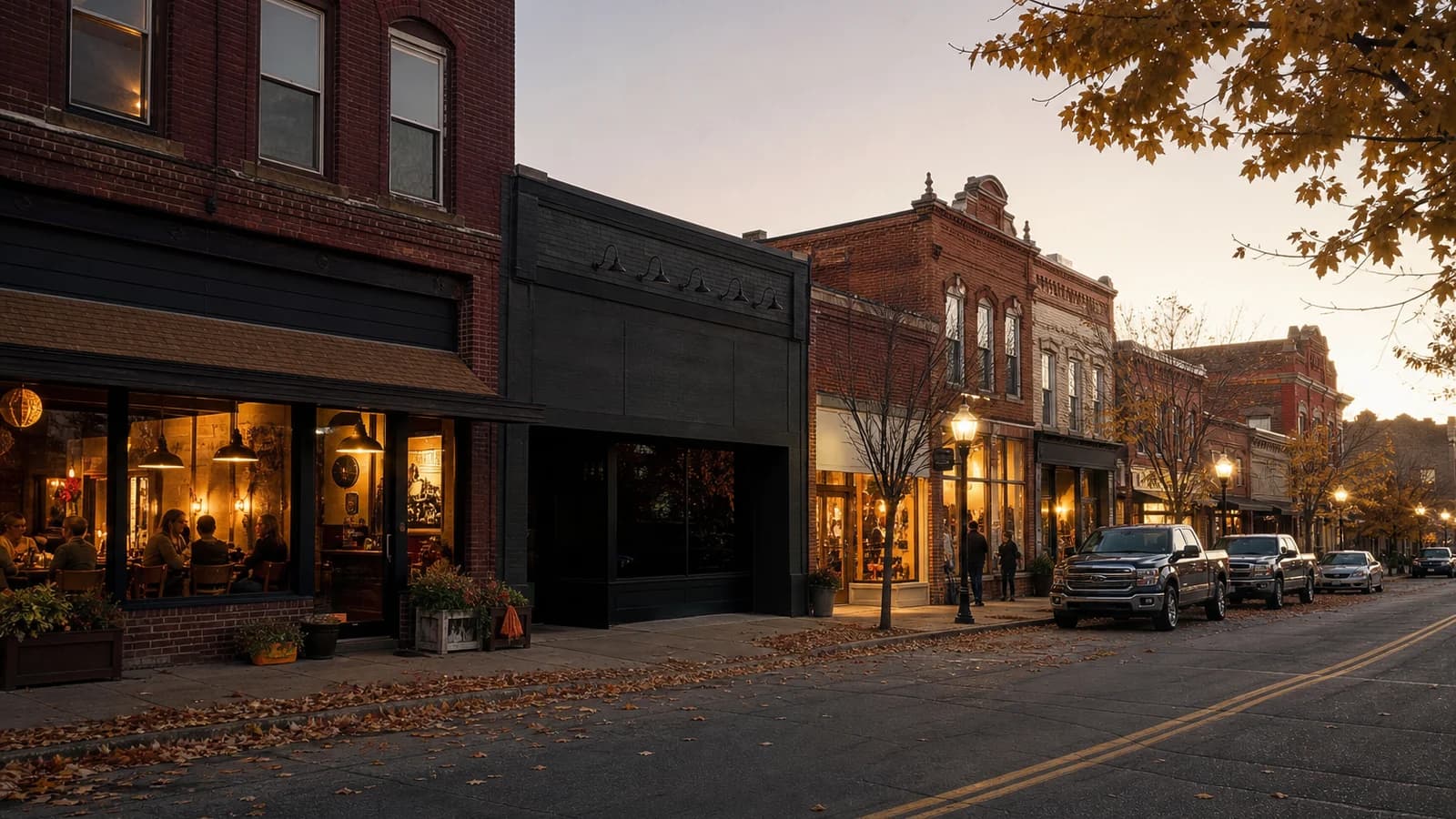
Picture a main street in a small Minnesota town on a late October afternoon. Every shop has its lights on except one. The work inside might be the best on the block, but from the sidewalk you'd never know anyone was home. That's the position almost every local business is in when a homeowner asks an AI tool who to call.
98.8% is not a typo
SOCi's Local Visibility Index (2026) found that ChatGPT recommended only 1.2% of the business locations it studied, which leaves 98.8% effectively invisible to AI search. Not buried on page two. Not ranked low. Left out of the answer.
Two things to be straight about. That's SOCi's figure, not ours, and it covers about 350,000 locations of multi-location brands in many industries, not independent contractors in particular. And notice what it doesn't measure. It isn't a score for your craftsmanship, your reviews or how long you've been in business. A roofer with thirty years and a loyal customer list can sit in that 98.8% for one plain reason: the website doesn't give a machine anything to read.
That's good news in a roundabout way, because "can a machine read it" is a much easier thing to fix than "are you any good."
Five reasons a good contractor's site reads blank
Think of your website as a job the inspector has to sign off on. These are the five things we check, and they're the usual reasons a site doesn't pass.
- No structured data. Schema is the paperwork the inspector reads. It's a block of code, invisible to visitors, that states your business name, trade, service area and phone in a format a machine understands. Without it the machine has to guess. A note on honesty: Google says it doesn't need special markup to show a page in its AI features, and it does need a page it can index and read (Google Search Central). Schema isn't magic. It removes guesswork, and guesswork is what gets a business skipped.
- Your content is trapped. Services listed inside a photo. A price sheet or service-area map saved as a PDF. A slider or booking widget that only draws its words after a script runs. A person sees all of it. A crawler that doesn't run scripts may see an empty frame.
- Your name, address and phone don't match. One version on the website, another on your Google Business Profile, a third on a directory from 2016. Machines cross-check, and a mismatch reads as unreliable.
- No direct answers. Homeowners ask real questions: how long does a tear-off take, do you work in winter, what does a permit involve here. If no page answers one in two or three plain sentences, there's nothing to quote.
- A slow page. If the homepage takes forever to load on a phone, people leave, and a crawler may not wait around either.
You'll recognize a few of those. Almost nobody has all five fixed, which is the point of this post.
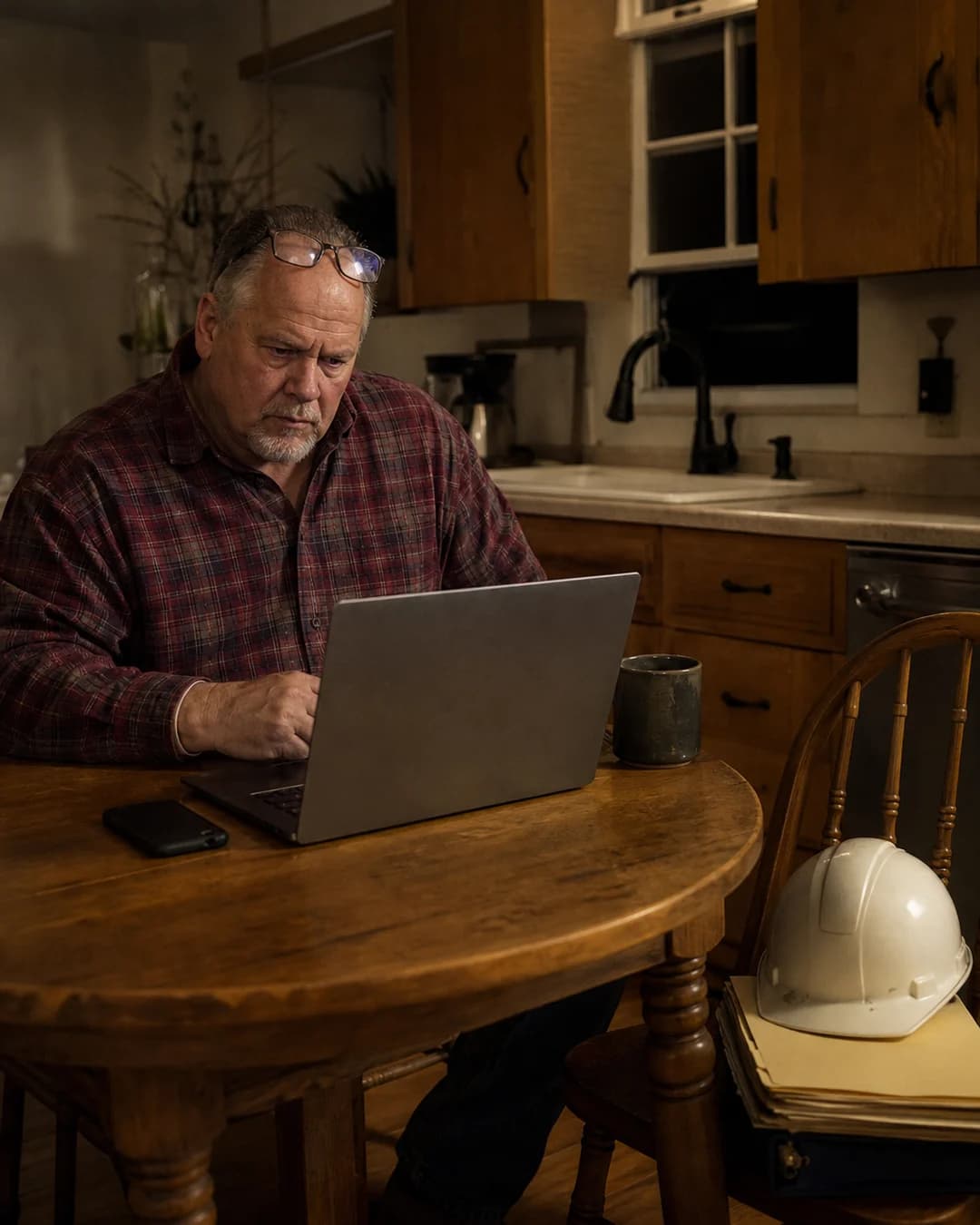
Try it yourself: the view-source test
This takes three minutes and costs nothing.
- On a computer, open your homepage. Right-click and choose View page source (or press Ctrl+U).
- Press Ctrl+F and search for your phone number, exactly as a customer would dial it. Then search for one service you sell and your town.
- If you find them in plain words, good. If the source is mostly script tags and you can't find your own phone number, a tool that doesn't run scripts may be looking at an empty shop.
- Now open ChatGPT and type: "Who are the best [your trade] companies in [your town]?" Then try a second question: "What's the phone number and address for [your company name]?"
Read the answers. Whose names came back? Did it get your details right, get them wrong, or draw a blank? Nobody controls what an AI says, so don't read too much into one answer. But if it can't describe you, that tells you something.
Being invisible is normal, and that's your opening
If 98.8% of local businesses are invisible, then being invisible isn't a failing. It's the default. And a default is easy to beat.
You aren't trying to outspend the biggest company in your market. You're trying to be one of the few whose website can be read, and the bar for that is low. Plain text where the words belong. Details that match everywhere. A real answer to the question a homeowner actually asks.
We can't promise any AI will name you. Nobody can, and anyone who says otherwise is selling something. What you control is whether you're readable. That part is work you can do.
What you can do this month, no purchase required
- Put your phone number, address and service area in plain text on the page, not only in a logo, banner or photo.
- Turn each PDF that holds important information into an ordinary web page with real headings.
- Make your business name, address and phone identical, character for character, on your site, your Google Business Profile, Facebook and every directory listing you can find.
- Write five answers in your own words to the questions customers ask you on the phone, two or three sentences each, on a page of their own.
- Add LocalBusiness schema. Most website platforms have a plugin or a field for it, and free generators exist.
- Run your homepage through a free page-speed tool and fix what it flags first.
- Optional: publish an llms.txt file, a plain text guide for AI crawlers. It's cheap, but Google says its AI features don't need one, so treat it as a nice-to-have and not a ranking secret.
What fixed looks like, and how to check yours
Alpine Peak Roofing scored 52 out of 100 on our own five-part AI-search readiness check in August 2026, and 95 when we re-checked it on October 10, 2026. Same company, same crews, same reviews. The difference was that a machine could finally read what was already true. Silver Loon Roofing went from 74 to 97 and EcoGuard Insulation from 72 to 94 on the same check.
To see where your own site stands, run the free audit at peakgrowthpartner.com. Type in your web address and in seconds you get a score out of 100 and five checks: whether AI tools can read your business details, whether you have an llms.txt guide, whether your answers are marked up so they can be quoted, whether your headings are laid out so AI can follow them, and your page speed. No email, no card, no call. If you want the nine-page report with the fix code included, it comes by email. There's a version for your trade, too: builders, roofing, mechanical and site work.